Queensland Government · Business Launchpad (via Symplicit)
Helping small businesses work out what they need to do
Redesigning Business Launchpad so small business owners can see which licences and regulations apply to them, in plain language, without knowing government terms first.
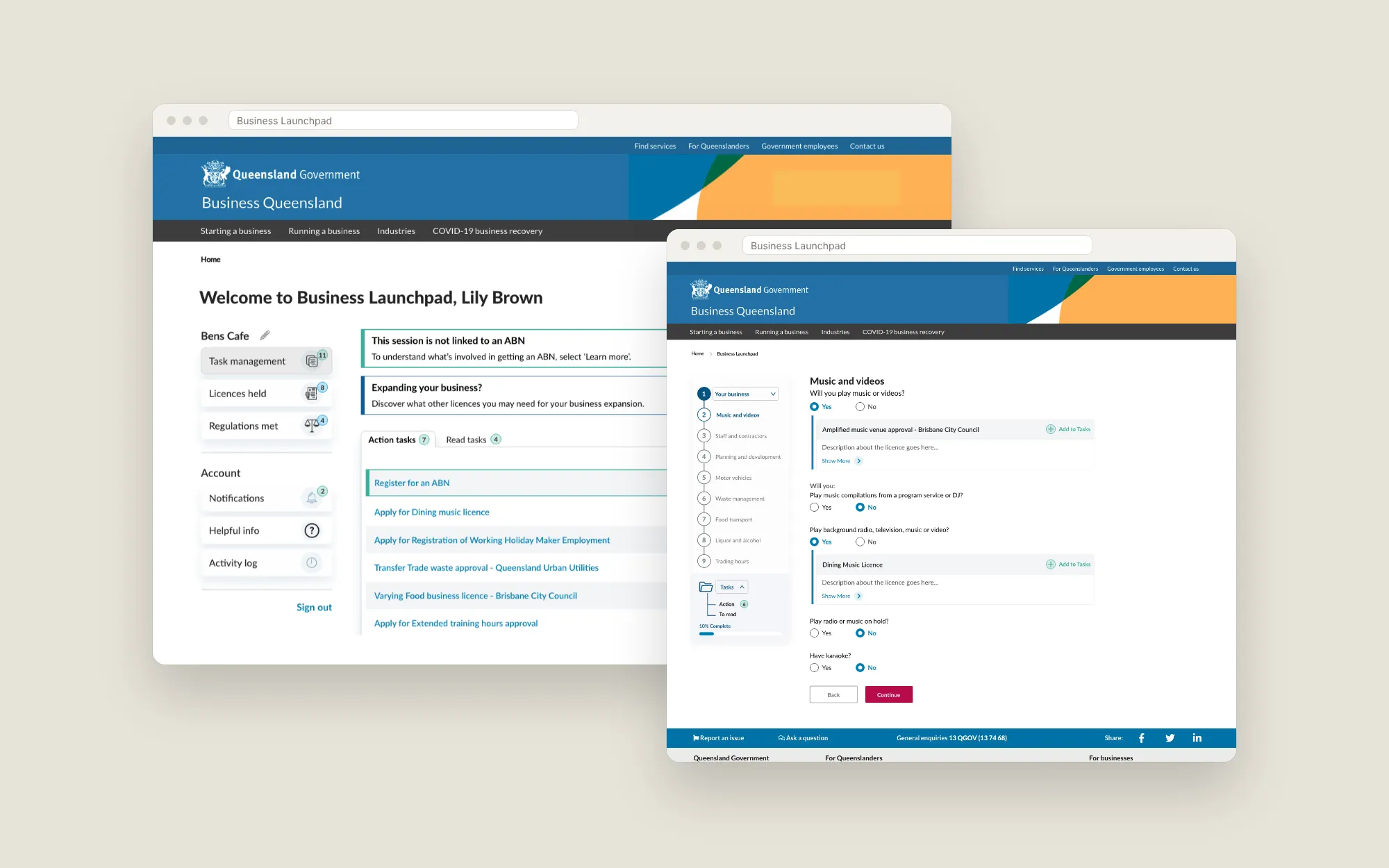
- Role
- Senior UI designer, high-fidelity prototypes and research facilitation
- Team
- Cross-functional Symplicit team with the Department of Employment, Small Business and Training
- Timeline
- Phases two and three of a three-phase redesign
- Problem
- Business Launchpad was meant to put all of a new business's regulatory information in one place, but its processes were complex, its language was government-speak, and people abandoned tasks because they didn't know where to start.
- 2rounds of customer testing on the high-fidelity prototypes
- Plain languagedashboard organised by what to do next, not by regulation
- Guidedquestion flow that narrows licences to the ones that apply
The situation
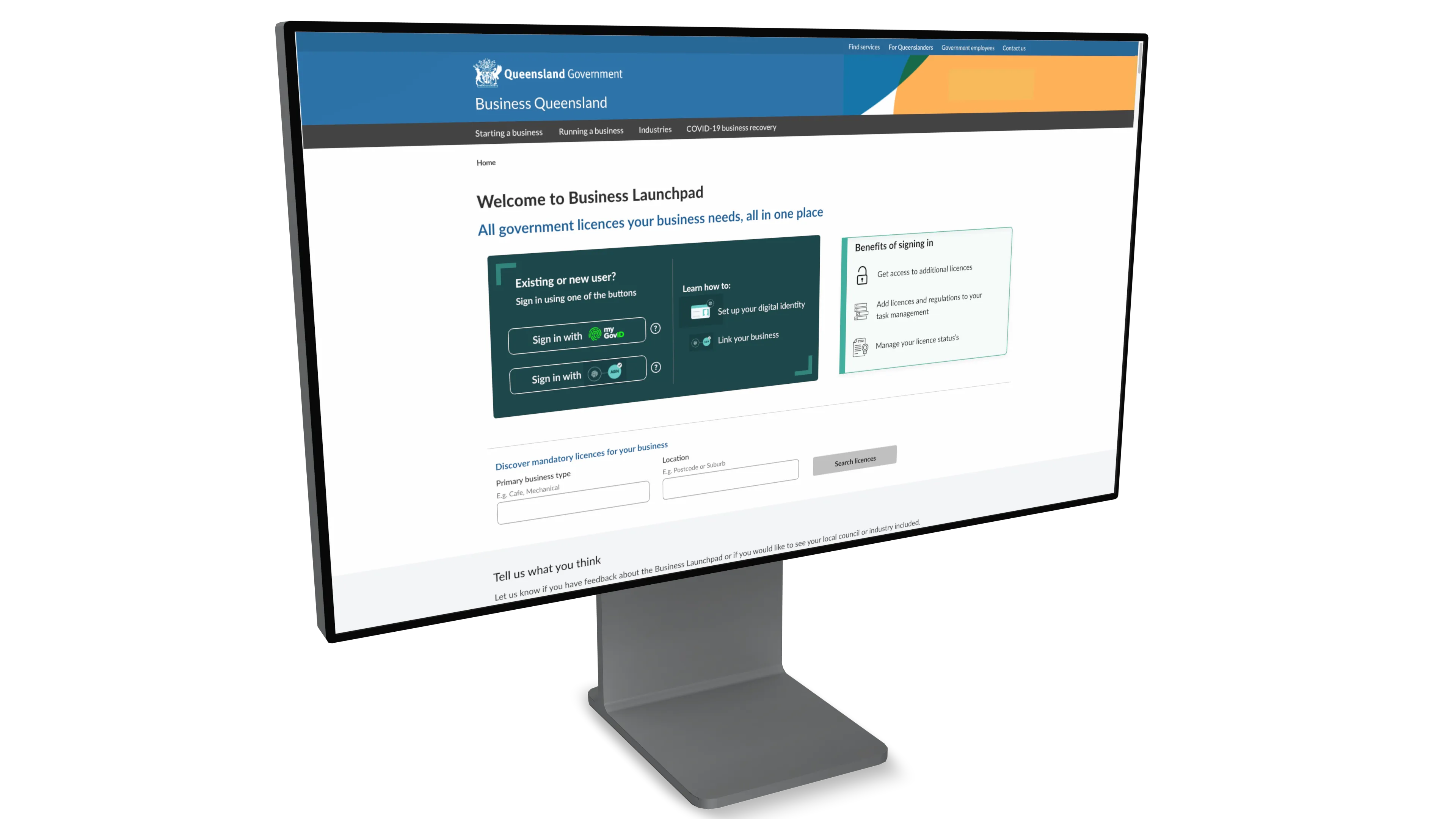
Business Queensland launched Business Launchpad so people starting a business could get all their regulatory information in one place. The platform worked, but it was hard to use. Research showed people were overwhelmed by terminology and unsure which licences applied to them, and they gave up because of uncertainty rather than a lack of motivation.
I joined for phase two. Phase one had reviewed the existing platform, tested it with customers and produced first screen designs. My job was to get up to speed fast, challenge earlier assumptions with high-fidelity prototypes, and run the testing that would shape phases two and three.
What research told us
- Cut cognitive load by simplifying copy and terminology.
- Make the primary action clear at every step.
- Show the value of signing in earlier, so people engage.
- Fix responsiveness issues across breakpoints.
Decision 1: ask questions instead of listing requirements
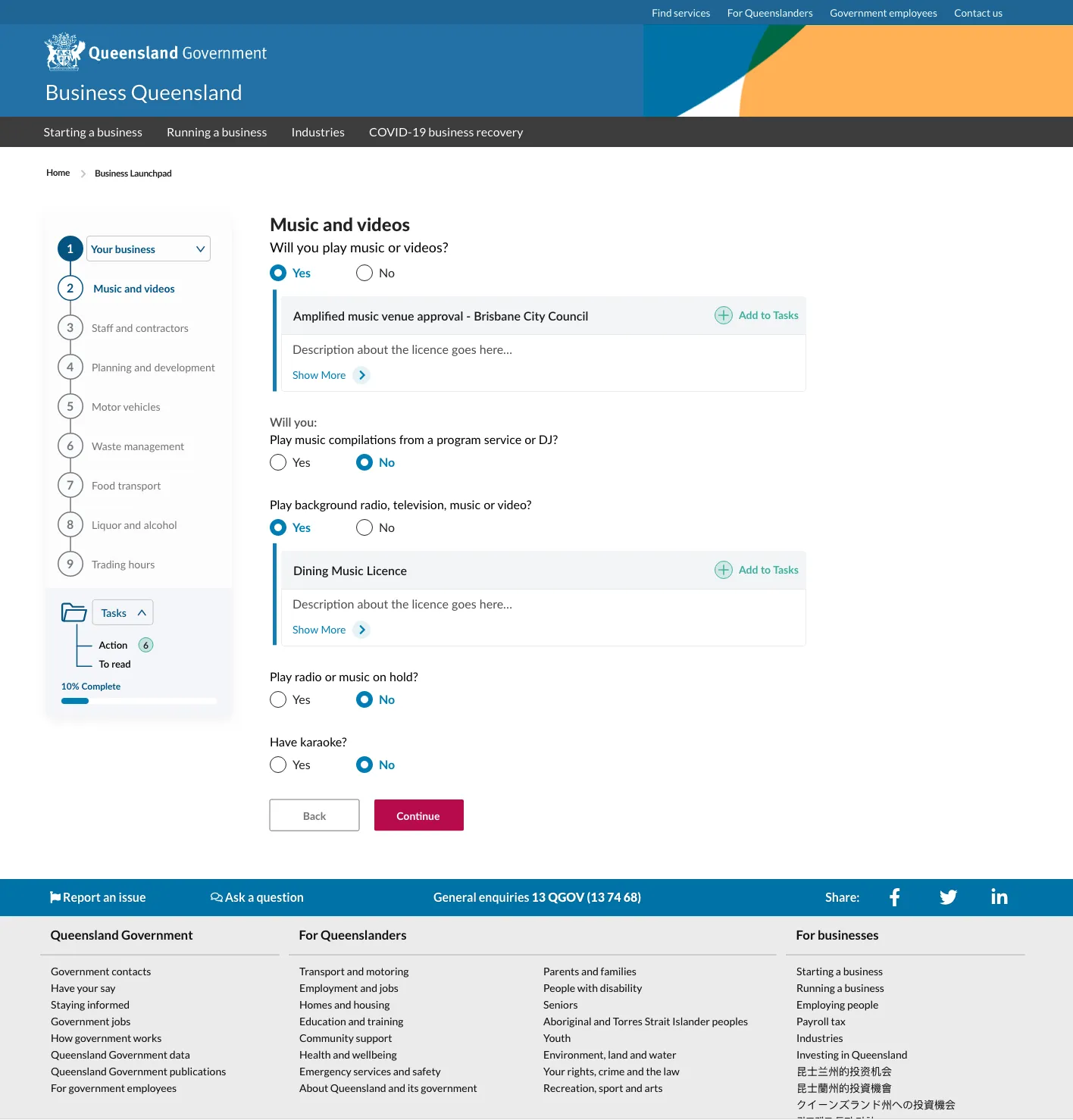
The hardest job was helping people work out which licences applied to their business. Rather than showing long lists of requirements, I designed a guided question-and-answer flow that narrows the results with each answer.
People only see what’s relevant to them, and the system explains why each licence is needed. In testing, that explanation is what made people trust the result.
Decision 2: organise the dashboard around actions, not regulations
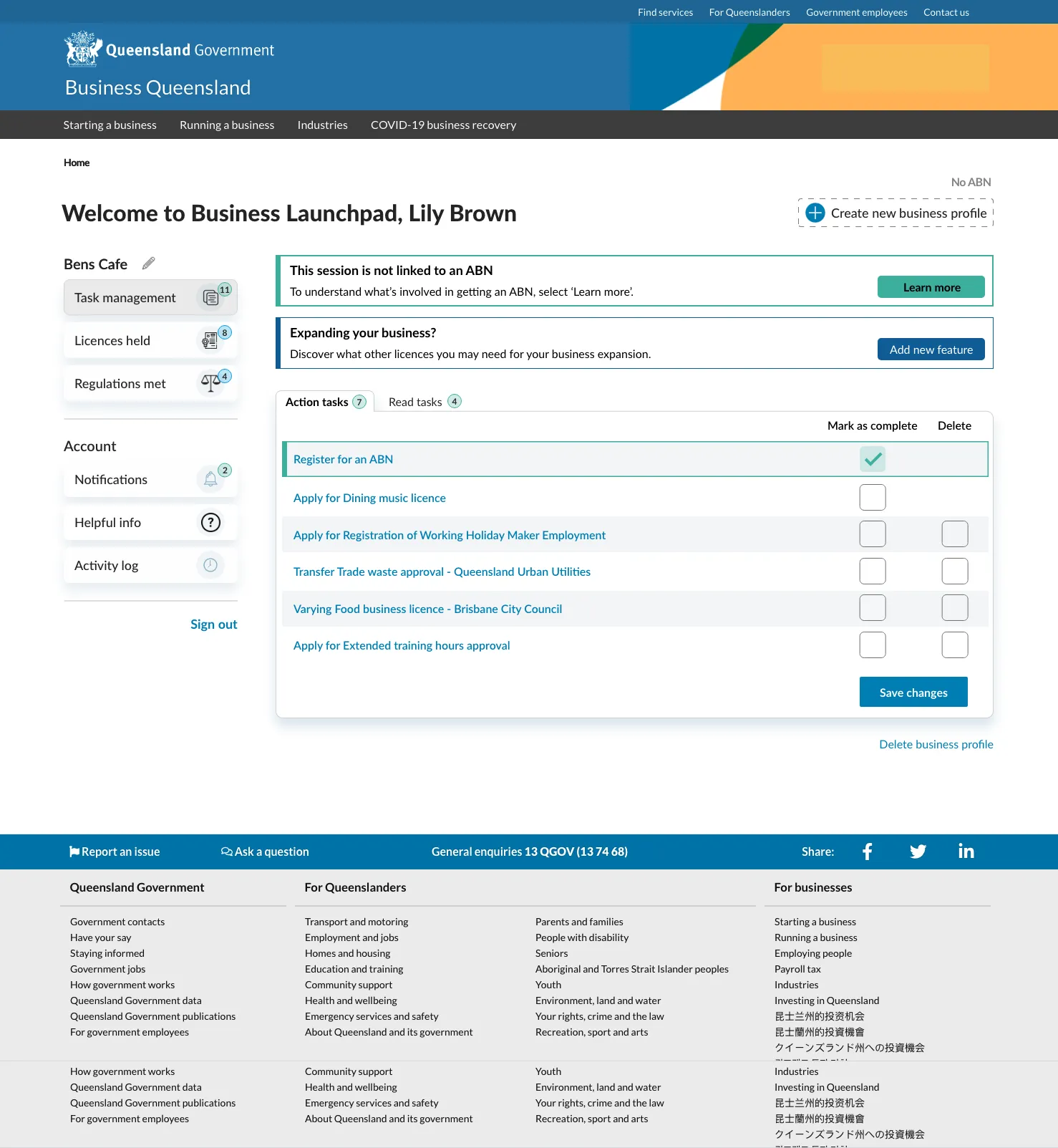
The original dashboard grouped everything by regulatory category, so people had to understand government terms before they could do anything. I moved it to an action-based model: what you need to do next, in plain language, with clear next steps.
Customers no longer needed regulatory knowledge to understand their responsibilities, and moved through tasks with more confidence.
Testing and iteration
The prototypes went through two rounds of customer testing, plus stakeholder review between rounds. Each round tightened the terminology to match the words people already used, made the primary action clearer, and made the signed-in and signed-out experiences consistent.
- PrototypeAdobe XD
- TestRemote sessions on Zoom
- IterateRefine and repeat
Round 1A plain list of industries.More industries, so people could find themselves.Plainer question, bigger options to tap.
Outcome
Simpler language, action-based navigation and guided decisions made Business Launchpad much easier to use, especially for people new to regulation. The redesign was set up to scale across Queensland once phase three was delivered.
What I learned
- Fresh eyes are an asset when you join mid-project. Asking lots of questions surfaced alternatives the team had stopped seeing.
- Explaining “why” builds trust. People accepted the licence results because the system told them why each one applied.